Cutting Edge Science for Parkinson’s Clinicians 2025
Event reportsIn November, we welcomed Parkinson’s specialists from across the UK to Sheffield for our 8th annual Cutting Edge Science meeting. The programme was also livestreamed to over 120 doctors, nurses, and allied healthcare professionals who joined remotely. Delegates and speakers represented a wide range of roles and experiences across different services, and the meeting provided a brilliant opportunity for education, shared learning, connection and professional networking.
Chaired by Dr Neil Archibald and Dr Lucia Ricciardi, the programme set out to explore what Parkinson’s care might look like over the next decade – from gene testing and psychedelic research to infusion therapies, DBS and botulinum toxin. As Neil reflected in his opening remarks, referrals are rising, complexity is increasing and expectations are growing. The question for all of us is not simply ‘what is new’ but ‘how do we use it well’.


Gene testing for the clinician – who, what and why?
Dr Raquel Real opened the sessions with a clear and clinically focused guide to genetic testing in Parkinson’s. Genetics is no longer something that sits purely within research clinics. As gene-targeted trials expand and disease-modifying strategies become more specific, understanding who to test and how to counsel patients is becoming part of mainstream practice. Raquel emphasised the importance of careful patient selection, clear communication and realistic expectation setting. Testing may influence trial eligibility, family discussions and long-term planning, but it must always sit within thoughtful clinical context. For many in the room, this session provided a helpful framework for navigating a rapidly evolving area.
“Raquel, that was utterly brilliant. That might have been the best talk on genetics in Parkinson's I've ever heard. Thank you very much for coming and giving that”
Dr Neil Archibald


Psilocybin and Parkinson’s
In an engaging interview, Neil and Lucia spoke with Dr Ellen Bradley about emerging research into psilocybin-assisted therapy in Parkinson’s. Neuropsychiatric symptoms, particularly depression and anxiety, remain disabling aspects of the condition.
“The most recent data I've seen estimates that both [depression and anxiety are] kind of somewhere in between the like, 35% of patients to as high as 50 to 60%, that's very common.”
Dr Ellen Bradley
Early phase studies suggest that psychedelic-assisted therapy may offer sustained improvements in mood and psychological wellbeing for some patients when delivered within structured therapeutic settings. The discussion was balanced and pragmatic. This is not routine practice, and robust evidence is still developing, but it represents an important shift: taking the psychiatric burden of Parkinson’s as seriously as its motor features.
“Can we cure Parkinson’s?”
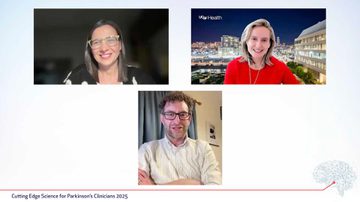
Dr Simon Stott tackled the question many patients and clinicians continue to ask. Reviewing the current landscape of disease-modifying research, he reflected on recent trial results, including those targeting α-synuclein and GLP-1 receptor pathways. While some headline studies have been disappointing, Simon reminded us that negative trials are part of scientific progress. They refine hypotheses, improve trial design and move the field forward. His message was one of realism combined with optimism. We are not there yet – but the scale and sophistication of current research would have been unimaginable a decade ago.
“There's a lot of exciting research exploring what we're trying to cure. And 2026 is going to be a very important year. It's going to give us, hopefully, answers to some of the questions around our theories of Parkinson's”
Dr Simon Stott
Wonderful event yesterday in Sheffield - many thanks to @TheNeuroAcademy for the invitation to speak about some of the considerations around "curing" #Parkinsons
— The Science of Parkinson's (@ScienceofPD) November 27, 2025
Fascinating meeting - learned a lot about brain imaging, PD genetics & infusion devices - I can recommend attending https://t.co/eqbHmabEYJ
Towards better diagnosis – making the best use of imaging
“The problems we have in the Parkinson's landscape: we're not diagnosing people early enough. When we do diagnose people, we're not accurate enough. And then the measures that we're currently using are really not informative enough”
Dr Chris Lambert
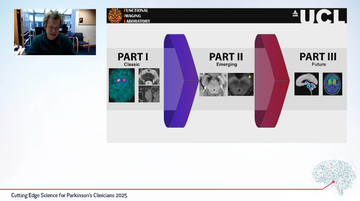
Dr Chris Lambert brought the focus back to the clinic, exploring how imaging can support diagnostic accuracy and clinical confidence. While Parkinson’s remains a clinical diagnosis, advances in structural and functional imaging are sharpening our ability to distinguish mimics and better understand disease networks. As imaging biomarkers evolve, they may increasingly complement emerging molecular and genetic tools, moving us closer to earlier and more precise diagnosis. For clinicians balancing uncertainty in early presentations, this session offered both reassurance and direction.
Infusion therapies - how to select, what to use and how to use it
Alison Leake and Dr Lucia Ricciardi shared their extensive experience of delivering infusion therapies within a busy NHS service. They reviewed the evidence underpinning apomorphine and levodopa-based infusions, with consistent reductions in off time demonstrated across trials. However, as always, the science is only part of the story. Patient selection, MDT discussion and expectation management were recurring themes. Non-motor fluctuations, particularly anxiety, sleep disturbance and pain, may respond well to continuous dopaminergic delivery, but pumps bring practical challenges. Feedback from their local focus group highlighted both the life-changing benefits and the emotional and logistical burden during the early months of treatment. Take-home message: advanced therapies require careful infrastructure, strong nursing leadership and close follow-up – but when delivered well, they can transform quality of life.
"Great review of the evidence bases, the pathway discussion has inspired me to finalise and perfect our own for levodopa and carbidopa!"
"Very helpful to see how other services utilise non-oral therapies. Very well delivered."
"Excellent benchmark in terms of creating our own service pathway."
Delegate feedback on this session


Deep brain stimulation – what’s new and when should we refer?
Mr Akbar Hussain provided an energetic and forward-looking overview of developments in deep brain stimulation. Directional leads, image-guided programming and adaptive (closed-loop) DBS are already reshaping how we optimise outcomes. The ability to sense neural signals and adjust stimulation dynamically may help address symptoms that have traditionally been harder to manage. He emphasised that DBS is not static technology; integration with sensing platforms, wearable devices and AI-assisted programming may further personalise therapy. Discussion then turned to referral timing. As waiting lists grow and technology advances, ensuring equitable access remains a challenge. Describing the traditional five-year rule as “old fashioned”, Mr Hussain encouraged earlier MDT conversations rather than waiting until all options have been exhausted.
“I think the best way to explain this is to show your patients. If you show them the graphs and involve them with the screen very early on, and you say, look, as I’m putting the energy into your brain and stimulating this, your waves are getting suppressed”
Mr Akbar Hussain


Botulinum toxin in the movement disorder clinic – who and how?
Dr Carla Cordivari closed the day with a practical and encouraging session about botulinum toxin use. From blepharospasm and cervical dystonia to tremor and sialorrhoea, she demonstrated how treatment can often be delivered safely within standard clinics, provided clinicians understand anatomy and start cautiously with dosing. More complex patterns may require EMG or ultrasound guidance, but many cases do not. She encouraged clinicians to expand capacity through training and multidisciplinary working, highlighting the growing unmet need and long waiting lists. The session reinforced botulinum toxin as a powerful yet underutilised tool in symptomatic management.
“There is always a little bit of fear in using the botulinum toxin. So my aim today is to reassure you that it can be easy and there can be a chance to use it in the normal clinics.”
Dr Carla Cordivari
The 2025 Cutting Edge Science meeting captured the scale of the challenges facing Parkinson’s services and the pace of scientific progress. Across sessions, a unifying message emerged: innovation must translate into tangible improvements for patients, and this requires collaboration across disciplines. For the first time, this meeting was delivered without external sponsorship. By introducing a delegate fee, we were able to maintain the same high-quality programme and expert speakers.
"This has been one of the best educational days I have attended for a long time, well done to all."
"Fantastic, quality speakers, well-pitched, interesting topics, brilliant. The ability to attend remotely was extremely convenient for me, and I still took a great deal from the meeting."
"Topics were very well selected; they covered important hot areas in the diagnosis and management of Parkinson's. I thought it was worth the money."
Delegate feedback 2025
Watch all sessions on demand
If you were unable to join us live, all sessions are now available on demand as an online course via our website.

We thank all our speakers, chairs and delegates for contributing to such an inspiring and forward-looking meeting. We look forward to continuing the conversation in November this year. The 2026 Cutting Edge Science meeting will be announced soon. Make sure to subscribe to our mailing list to receive updates.
Related articles

'The things you can't get from the books'
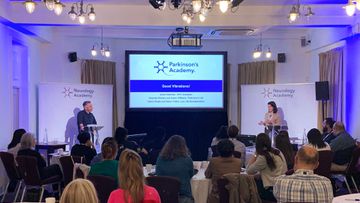
Parkinson's Academy, our original and longest running Academy, houses 23 years of inspirational projects, resources, and evidence for improving outcomes for people with Parkinson's. The Academy has a truly collegiate feel and prides itself on delivering 'the things you can't get from books' - a practical learning model which inspires all Neurology Academy courses.